Hi, I’m Sneha — a Scrum Master, mother, writer, and a lifelong learner. This blog is my space to share stories from real life — from parenting a curious little boy to navigating career breaks, emotional growth, and the pursuit of inner peace. Professionally, I work as a Scrum Master and Agile Coach, where I facilitate collaboration, empathy, and continuous improvement within teams. Personally, I apply many of those same principles to life and parenting — reflection, adaptation, and resilience. After taking a conscious break to raise my son, I returned to my career not as someone who had fallen behind — but as someone who had evolved through a different kind of leadership: motherhood. Through this blog, I share honest experiences about: • The joys and chaos of parenting • Managing mental well-being and self-doubt • Balancing a career and caregiving • Learning and evolving — one day at a time I believe in writing with honesty, listening with empathy, and living with intention. If you’re someone who’s navigating growth, guilt, ambition, motherhood, or all of it together — you’re not alone. Welcome to my journey. Let’s grow through what we go through. 🌿
A few days ago, I came across several posts and comments about a young boy who appeared on a TV quiz show.
He made a mistake — maybe spoke out of turn, maybe appeared too confident — and suddenly, the internet decided to turn him into a topic of public judgment.
LinkedIn, of all places, was filled with posts analyzing his behavior, his upbringing, and even his supposed medical condition.
And as I scrolled through them, one thought kept echoing in my mind — Why are we being so harsh on a child?
Yes, maybe he was wrong. Maybe he spoke in a way that didn’t come across well. But he’s still a child.
He’s still learning — how to express, how to respond, how to balance emotion and excitement.
Children make mistakes. That’s how they grow. But when grown-ups — educated, professional adults — publicly tear down a child for being imperfect, we stop being mentors and start being critics.
This isn’t how we build confidence in the next generation. This is how we break it.
I don’t know this boy personally. But I know what it feels like to see a child’s spirit questioned in public.
As a parent, I know how deeply one small comment can hurt — not just the child, but the family that’s trying their best.
It’s easy to forget that behind every viral clip is a small heart that might not yet know how to process ridicule.
We talk so much about empathy, emotional intelligence, and mental health — yet in moments like this, we forget what they actually mean.
Even if a child is wrong, the answer isn’t public humiliation. It’s guidance. It’s patience. It’s remembering that our words carry weight, especially when spoken by adults.
Because one unkind post may fade from our feed, but it can stay in that child’s memory for years.
Before commenting, forwarding, or analyzing, maybe we can all pause for a second and ask:
“Am I helping, or am I hurting?”
If this were our own child, would we want the world to treat them this way?
The courage it takes to sit under bright lights, answer questions, or simply be seen on a big stage — that deserves admiration, not ridicule.
We don’t need to protect children from mistakes. We need to protect them from cruelty.
Let’s stop making viral moments out of their innocence. Let’s teach with kindness, not shame.
And let’s remember — behind every small voice is a big heart trying to find its place in the world.
Be kind. Especially to children. The world is already harsh enough.
Author’s Note: As a parent, I’ve come to believe that empathy isn’t about big gestures — it’s about restraint. About choosing silence over criticism. About remembering that every child we see online or offline could have been ours.
Quick stand-ups, sprints, end-of-week retrospectives… the longer I’ve worked as a Scrum Master, the more I’ve realized Scrum isn’t just for product teams. It’s a way to live with focus, rhythm, and purpose—like the quiet joy of crossing the last task off a sticky note.
What if the same rituals that help teams build great products could also help us live calmer, more intentional lives? That’s what I’ve discovered as a Scrum Master—and as a mom. Scrum isn’t just for work; it’s become the quiet rhythm of my mornings, my weekends, even how I parent my son.
Daily Scrum – My Morning Pause
In Scrum, the Daily Scrum is a quick 15-minute huddle where the team shares updates, roadblocks, and makes sure everyone’s on the same track.
In my life, my Daily Scrum starts with a hot cup of chai, sometimes while I’m sliding apple slices into a lunchbox. I stop for a moment and ask myself:
What matters most right now?
What did I do yesterday that moved me even one small step ahead?
What’s blocking me today?
It’s amazing how this small pause shifts the whole day. Just like a team that leaves the Daily Scrum with shared clarity, I leave that cup of chai with renewed calm and direction.
And sometimes, my kiddo adds his own version—he’ll hug me tight before leaving for school and say, “Mumma, today I’ll try not to forget my notebook!” or “Today I have art class, but my crayons are too small.” And honestly, that’s the beauty of it. That tiny commitment is his way of planning his day too.
The Daily Scrum isn’t about perfection. It’s about presence. A reminder that when we take a few minutes to connect—with ourselves or with others—we carry a little more clarity into the chaos ahead. Grounded mornings naturally lead into the next step: looking ahead, not just to today, but to the week as a whole.
Question for you: If you had to run a 2-minute check-in for your life, what would you share today?
Sprint Planning — Designing the Next Few Days
Sprint Planning is like opening a blank notebook at the start of a week—it’s where clarity meets possibility. The team gathers, looks ahead, and decides: What can we realistically take on? It’s not about filling every minute with tasks, but about choosing wisely so that progress feels steady, not overwhelming.
At home, I feel this same rhythm when planning the week with Riyansh. Every Sunday evening, we sit down and talk—what homework is due, what playtime he wants, what outings we might squeeze in. Sometimes he dreams big (“Let’s finish all the storybooks!”), and I gently help him break it down (“Maybe two this week?”). It’s a balance between ambition and reality, excitement and focus.
That’s the essence of Sprint Planning too. It’s not about promising the world, but about aligning as a group: Here’s what we’ll do, and here’s why it matters.
And just like my son’s week, things don’t always go as planned. But the act of planning together gives us direction, comfort, and a shared sense of purpose.
Question for you: If you looked at the “sprint” ahead in your own life, what’s one thing you’d choose to commit to—something meaningful, realistic, and worth celebrating at the end?
Sprint Review — Celebrating Progress
A sprint review isn’t just about ticking boxes or showing what’s done. It’s about pausing, looking back, and appreciating how far we’ve come—even if the journey isn’t perfect.
The other evening, I was helping my son with his homework. He had worked so hard on a tricky math problem and finally got it right. His eyes lit up as he looked at me, waiting for that nod, that smile, that little cheer from me. In that moment, I realized—celebration doesn’t need fireworks. Sometimes, it’s just a proud smile, a “well done,” or a hug that says, I see your effort.
That’s what a Sprint Review feels like at its best. It’s more than a feature completed, or a story delivered—it’s the journey behind it – the collaboration, the learning, the resilience behind the work. It’s about saying to the team, we see you, we value this, and we’re moving forward together.
Progress is rarely a giant leap; it’s usually small steps. Just like Riyansh’s math practice, those little wins stack up over time into something meaningful.
Question for you: When was the last time you paused to celebrate your small wins? Who in your life could use that simple “well done” from you today?
Sprint Retrospective — Learning and Feeling Safe
A retrospective is one of my favorite Scrum ceremonies because it isn’t about tasks, tickets, or deadlines. It’s about people. It’s about creating a space where voices can be heard without fear, where mistakes turn into lessons, and where growth happens through trust.
When done right, a retrospective doesn’t feel like a meeting at all. It feels like a pause—a moment to breathe, reflect, and connect. It’s not about pointing fingers or digging into blame. It’s about asking: What worked? What didn’t? And how can we support each other better next time?
One night at home, I realized what that feeling of safety truly looks like. My son, Riyansh, had just drifted off to sleep beside me. The room was quiet, lit only by the soft glow from the window. As I adjusted his blanket, he stirred and, without even opening his eyes, shuffled closer until his little arm brushed against mine. He didn’t need to ask if it was okay. He didn’t hesitate. He just knew it was safe.
That’s exactly what a good retrospective should be. A place where you can lean in without hesitation. A place where you know your thoughts, fears, and ideas will land softly, without judgment. Just like Riyansh knew he could find comfort in my presence, team members should know they can find safety in each other.
Because safety isn’t built with big gestures—it’s built with consistency, trust, and the quiet assurance that you matter here.
Question for you: Who in your life gives you that kind of safety? And how can you offer that same space to others—at work, at home, or within yourself?
Backlog Refinement — Clearing the list
Backlog refinement is often seen as a chore—a long list of items waiting to be discussed, sized, or clarified. But at its heart, it’s really about making space. It’s about clearing away confusion so that the team can focus on what truly matters.
I like to think of it the way I clear out my home at the end of the week. One glance at the table and I’ll see school worksheets, unopened mail, a stray coffee mug, maybe a toy car left behind by Riyansh. It’s not a disaster—but it’s clutter. And clutter quietly weighs you down.
When I finally take a few minutes to sort the pile—papers in a folder, dishes back to the kitchen, toy car in the basket—the space feels lighter. Clearer. Easier to breathe in.
That’s exactly what backlog refinement does for a team. It’s not about rushing to finish or making everything “perfect.” It’s about reducing noise, removing clutter, and creating clarity. When stories are clear, the team moves with more confidence. Just like a tidy home, a refined backlog creates room for focus, flow, and peace of mind.
Question for you: What’s one small “clutter” in your life or work you can clear today to create more space for what matters?
Scrum in Parenting, Reading, and Traveling
Scrum isn’t just for teams and projects—it sneaks into everyday life too. Parenting, reading, traveling—each has its own rhythm, its own backlog, and its own sprints.
Take parenting. Every morning with Riyansh feels like a daily stand-up. We check in: breakfast ready? School bag packed? Water bottle filled? It’s quick, focused, and keeps the day moving. Some days flow smoothly; others feel like unexpected blockers—but that’s part of the sprint too.
Then there’s reading. My books are my backlog—some half-finished, some waiting patiently on the shelf. I don’t try to do it all at once. I pick one, focus for a while, and let myself learn. That’s refinement in disguise—deciding what to tackle now, and what can wait until later.
And traveling? That’s a sprint review if I’ve ever seen one. Every trip is a chance to look back: What went well? What could be better? Did we pack too much? Should we plan less and explore more next time? Each journey teaches, improves, and prepares me for the next adventure.
Scrum isn’t a framework I leave at work. It shows up in the small moments of life, reminding me that progress is built step by step, reflection by reflection.
From chai-fueled mornings to bedtime reflections, Scrum has given me a rhythm that steadies both work and life. It’s not about rigid rules—it’s about presence, progress, and purpose. Sprint by sprint, cup by cup, life feels lighter, clearer, and a little more joyful.
Chapter 1: When Strength Breaks Down — and Breakthroughs Begin
When my son Riyansh was born, I thought I was ready. I had read the books, followed the advice, and believe I could manage it all. The feeding schedules, the sleep routines, the developmental milestones — I had it all planned. But nothing prepares you for the emotional weight of parenting. It’s not just about holding your baby — it’s about holding your breath, your tears, your identity, and your sense of control, all at once.
It’s the quiet 3 a.m. moments when your baby finally sleeps, but your mind doesn’t. It’s the decision fatigue, the invisible labor, the constant second-guessing. It’s love — fierce and consuming — paired with an equally intense exhaustion.
One night, after staying awake for more than a full day, I cried quietly on the bathroom floor. Not because I was weak — but because I was tired of being strong every second.
That night became a turning point.
I stopped waiting for someone to give me permission. I asked for help. I allowed myself five quiet minutes with a cup of tea. I stopped trying to “bounce back” and started asking what I needed to feel whole again.
That’s when self-awareness started to bloom.
But the journey didn’t stop there. What followed was a deeper reckoning with identity — who I was outside of being a mother, and how I could honor both the woman I was becoming and the one I used to be. That quiet breakdown was the beginning of everything shifting — not in a dramatic, cinematic way, but slowly, gently, like light returning after a long night.
Chapter 2: The Pause That Grew Me
Taking a break from my career brought guilt I didn’t expect. While others on LinkedIn were getting promoted and thriving, I was learning how to get my child to nap without tears. But in those “silent” months, I grew. I developed emotional resilience, adaptability, and clarity. “That so-called career gap taught me more about resilience and leadership than any corporate title ever could.”
I no longer see it as a gap. I see it as sacred space for transformation.
Returning to work wasn’t a straight line. After my maternity break, I rejoined as a QA — quiet, observant, still rebuilding my confidence. I didn’t step into leadership right away. But about a year in, something shifted. I began supporting a Scrum Master informally. At first, it was just guidance here and there — but soon, I found myself mentoring, facilitating, and slowly rediscovering my voice.
That experience reminded me of something I had forgotten in the chaos of parenting and self-doubt: I knew how to lead. It wasn’t loud. It wasn’t perfect. But it was real.
Two years into my return, I officially stepped into the role of Scrum Master. By then, I wasn’t just “back at work” — I was leading with empathy, teaching from lived experience, and healing by helping others grow.
When I began mentoring a junior Scrum Master, I uncovered something deeper: purpose. Helping someone else build confidence reflected my own growth back to me. Conducting organization-wide sessions on Scrum ceremonies helped me reconnect with my leadership voice.
Work became more than tasks and timelines — it became part of my healing.
Chapter 3:Writing My Way Back to Me
Writing this blog has become more than a habit — it has become a lifeline.
In a world that often expects perfection, performance, and polished smiles, this space became my sanctuary. Here, I don’t have to pretend. I don’t have to carry every role — mother, professional, daughter, partner — with practiced ease. I can just be me.
Each post I write peels away a layer. Some days, it’s raw — like reopening a wound I thought had healed. Other days, it’s soft — like sitting with a cup of tea and whispering truths I’ve long held inside.
I’ve learned that clarity doesn’t come from having all the answers. It comes from asking better questions. It comes from pausing, listening, and naming what I feel — even when the words are shaky.
This blog is where I reclaim my story, one word at a time. It’s where I remember that I’m not just surviving — I’m becoming.
And every time someone writes to say, “I felt this too,” I’m reminded that we don’t heal in isolation. We heal in truth. We heal in community. We heal when we stop running from ourselves.
Final Thoughts: You Are Allowed to Pause
If you’re reading this while juggling a million invisible things — work deadlines, school drop-offs, laundry piles, unspoken worries — I want you to hear this clearly:
You are not behind.
You are building strength, even when it feels like stillness. You are growing clarity, even in moments that seem uncertain. You are healing, even on the days that feel like survival.
The journey from chaos to clarity is not loud or linear. It’s made of small brave choices — like asking for help, forgiving yourself, or simply taking a deep breath before the next task. We often wait for the “right” time to pause — when the to-do list is clear, when the kids are older, when we feel more worthy of rest. But clarity doesn’t wait for the perfect moment. It arrives when you finally give yourself permission to stop pretending, to soften, to simply be.
As I look back, I realize that none of this was a detour — it was the journey I was meant to walk. From career breaks and toddler tantrums to coaching teams and rediscovering my confidence, I’ve learned that clarity often emerges after chaos — not before it.
So, if today feels heavy, let this be your permission slip: To pause. To breathe. To not have it all figured out.
You are not alone in this. You are deeply seen — in your chaos, in your courage, and in your becoming.
And maybe, just maybe, someone out there reading this is standing at that same messy intersection of motherhood, ambition, and self-doubt. If that’s you, I want to say: you are not behind. You are becoming.
Let’s keep growing. Let’s keep choosing peace, even when it’s loud.
Let me leave you with a few questions — answer them in the comments or just ponder them in your own quiet space:
Have you ever paused your career for something deeply personal?
What did that teach you?
What stories do you carry that deserve to be seen — not hidden?
How has your definition of success changed over the years?
What chaos in your life eventually brought clarity?
Thank you for reading my story. If this resonated with you, I’d love to hear yours. Let’s create space for real stories — not perfect ones.
For a long time, I confused the two. I thought if I was kind enough, agreeable enough, helpful enough—if I kept the peace, avoided conflict, and met expectations—I would be loved. I would belong.
But slowly, painfully, I began to see the truth: pleasing is not belonging.
Pleasing is performance.
It’s the art of reading a room, assessing what’s needed, and adapting yourself to fit. It’s twisting your truth into palatable shapes so no one feels uncomfortable. It’s shrinking, smiling, and saying “it’s okay” even when it’s not.
It looks like harmony, but it feels like exile—an exile from yourself.
Belonging is something else entirely.
Belonging doesn’t require your perfection.
It doesn’t demand your compliance.
It asks only for your presence—your real, messy, beautiful presence.
True belonging says:
“You don’t have to earn your place here. You already have it.”
And that kind of space? It’s rare. It’s sacred. It’s not always found in family, friendships, or even romantic partnerships. Sometimes, it starts in the quietest place: within you.
The Cost of Pleasing
When we make pleasing our path to connection, we:
Apologize for our needs
Feel responsible for other people’s emotions
Say yes when we mean no
Fear that disagreement means disconnection
We trade honesty for harmony.
We abandon ourselves to avoid being abandoned.
And at some point, the weight of all that pretending becomes unbearable.
The Shift Toward Belonging
Healing begins when we dare to be real.
When we choose to show up as we are—even when it’s awkward, even when it disappoints someone.
Belonging is found in spaces where:
You can say “no” without guilt
Your silence is respected, not resented
You’re not just tolerated, but truly seen
You can disagree and still feel deeply loved
Most importantly:
Belonging begins the moment you stop betraying yourself.
From Pleasing to Wholeness
I’m learning to ask myself daily:
Is this choice rooted in fear or freedom?
Am I being true, or am I performing?
Do I feel safe to be all of me here?
And when the answer is no, I gently step back—not to punish, but to protect. To preserve the sacred space where my truth lives. Because that’s what I want to offer my son, my friends, my team: a version of me that is whole, not hollow.
A Note to You If You’ve Been Pleasing to Belong
You are not too much.
You are not too opinionated, too sensitive, too intense, or too different.
You are allowed to take up space. To rest. To say no. To need.
You are allowed to show up without softening your edges to make others more comfortable.
You belong—not because you please—but because you breathe.
As you read this, I hope something stirred—a memory, a question, a longing to come home to yourself.
✨ I’d love to hear your thoughts. What part of this resonated most deeply? Has pleasing ever cost you more than you realized? Share your story.
Parenting is a journey filled with love, chaos, and countless moments that test our patience. No matter how mindful or intentional we try to be, there are days when stress spills over—and sadly, our children often become unintended recipients.
It had been one of those long days—work stress spilling into the evening, dinner delays, homework chaos. I found myself raising my voice at Riyansh over something small, something I can’t even remember now. But I remember his eyes. Wide, startled, searching.
I turned away, frustrated with myself more than him. And just as the guilt began to creep in, I felt his little arms wrap tightly around me from behind.
“Please hug me,” he said softly, “Heart to Heart. Tightly.”
I looked down. He was already reaching up, standing on his toes, heart open. In that moment, all my anger dissolved. He wasn’t asking for an apology. He was giving me grace. Teaching me—at just eight years old—that love can lead, even in the middle of a storm.
So I knelt down, pulled him close, and let our hearts press together. No more words. Just a quiet, powerful hug. A reset. A lesson. A gift.
It was a reminder that children don’t need perfect parents. They need connected ones. Present ones. Ones who are willing to pause, soften, and try again.
But it wasn’t just this moment. A few nights later, as we were winding down after another busy day, Riyansh came over to me and asked, “Can we just cuddle, Mama?”
I had been sitting on the couch, lost in my phone, mentally elsewhere as he talked about his day. In that simple, quiet moment, his request wasn’t just about the physical closeness—it was about needing connection. He wasn’t asking for anything grand. He wasn’t demanding attention or affection. He just wanted to be close.
I put my phone down and opened my arms. Without a word, he nestled into me. We stayed there, heart to heart, quietly enjoying the peace that only a cuddle can bring.
This moment reminded me that the power of presence isn’t in the grand gestures. It’s in these quiet, everyday acts of love and connection. In our fast-paced lives, it’s easy to get caught up in the whirlwind of tasks and responsibilities. But all our children need, sometimes, is to feel our warmth, our love, and our presence.
Moral:
Sometimes, the greatest gift we can give our children is our presence. In the quiet, simple moments of connection, we find the love and healing we both need. Children don’t need perfect parents—they need present ones.
There’s something beautiful about kindness, a quiet power in giving without expecting anything in return. But, over the years, I’ve learned that there’s a fine line between being kind and losing sight of who you are. It’s a line I’ve crossed more times than I care to admit. In the pursuit of making others happy, of being there for loved ones, I’ve sometimes paid a price I wasn’t prepared for—my own sense of self-worth.
I remember moments in my life when I’ve put the needs of others above my own, sometimes to the point where I barely recognized myself. Whether it was staying up late to help a friend, sacrificing personal time for family, or dimming my own voice to avoid conflict, the choice to be kind felt right in the moment. It felt like the right thing to do, the loving thing to do. But when the dust settled, I often found myself exhausted, disconnected from my own desires, and questioning my worth.
There’s an undeniable pressure to be kind, especially as a mother. I’ve often found myself torn between my own aspirations and the expectations placed upon me. I wanted to be a great mom to Riyansh, to be patient, loving, and always available. Yet, in doing so, I sometimes felt my own dreams and desires pushed aside. It’s a common story, I know—many women find themselves in this dilemma, where kindness and self-sacrifice become intertwined with self-worth.
I’ve realized, though, that this pattern of kindness at the cost of self-worth isn’t sustainable. At some point, you begin to feel as if you’re losing yourself in the process. The thing is, kindness doesn’t require you to forget yourself. True kindness, the kind that comes from a place of strength and love, doesn’t diminish your value. In fact, it enhances it.
There was a pivotal moment in my journey when I realized that I had been neglecting my own well-being. It wasn’t an easy realization. It came in the form of quiet exhaustion and a lingering sense of resentment, feelings that had been building up over time. It was in these moments, after taking a step back, that I understood—self-worth is not something to be given away freely. It needs to be nurtured, protected, and honored. It’s the foundation from which all our other acts of kindness should spring.
Now, I approach kindness with a healthier perspective. I still offer my support, my love, and my care, but I do it from a place of strength rather than sacrifice. I’ve learned to set boundaries and say no when it’s necessary, without guilt. I’ve come to understand that my worth is not contingent upon how much I give to others, but rather, on how well I take care of myself. I have to love myself first to truly give love to others.
I won’t pretend this shift has been easy. It’s taken time, reflection, and a lot of difficult conversations, both with others and with myself. But the reward has been worth it. I feel more grounded, more confident, and more connected to the people I care about because I’ve finally learned to show up for myself first.
Kindness, when practiced with self-respect, can be a beautiful gift to the world. It’s about balance, about giving without draining yourself. It’s about knowing that you are worthy of love and kindness, too—not as a byproduct of your actions, but as an inherent part of who you are.
In addition to the personal struggles I’ve faced, there’s a societal expectation that kindness often equates to selflessness, to giving so much that we forget to hold something back for ourselves. This expectation is especially prevalent for women, who are often socialized to put others first. Whether it’s the roles of daughter, wife, or mother, the narrative we’ve been told is that love is measured by sacrifice. But I’ve come to see that this narrative can be dangerous.
For years, I measured my worth through the lens of how much I could give. I thought if I gave everything I had, I would be loved more, valued more, or respected more. But all that giving left me feeling depleted, and the love I sought never seemed to fill the void that was left behind. I’ve found that real love and respect are born from mutual understanding and care, not from one-sided sacrifices.
There have been moments when I’ve questioned my worth because I wasn’t able to meet every expectation, when I felt as though my needs were somehow secondary. But those moments were powerful teachers. They taught me that by neglecting myself, I was actually doing a disservice to the people I loved. When we’re not grounded in our own worth, our ability to give—truly give—is diminished. It’s like pouring from an empty cup; eventually, there’s nothing left to offer.
One of the greatest gifts I’ve given myself in this journey is the permission to put my own needs on the same level as others’. It’s not about being selfish; it’s about being self-aware. It’s about understanding that self-care is not a luxury, but a necessity. Without it, I would never be able to show up for those who matter most in my life. I would have nothing to offer because I would have nothing left.
The beauty of embracing this truth is that it allows kindness to flourish in a deeper, more genuine way. When you honor your own needs and boundaries, your kindness doesn’t come from a place of exhaustion or resentment—it comes from strength, balance, and a clear sense of self-worth. In this space, kindness becomes a true gift, not a form of self-sacrifice.
As I’ve navigated this, I’ve also learned that the people around me, especially Riyansh, have a better understanding of what it means to give and receive love. I want him to grow up knowing that kindness doesn’t mean giving until you’re empty; it means giving from a place of fullness. I want him to see that self-respect and love for oneself are as important as the love we show others.
Ultimately, what I’ve discovered is that when we prioritize our own well-being, when we step into our own worth, we become more than capable of giving in ways that are both meaningful and sustainable. It’s a journey of embracing self-compassion, setting boundaries, and recognizing that our worth is not defined by what we do for others, but by who we are.
Kindness, in its truest form, is not about sacrificing our sense of self, but about giving in a way that honors both our own needs and the needs of those we care about. Only then can we truly give from a place of abundance, love, and strength.
So, I ask you: When was the last time you showed kindness to yourself? And what would it look like for you to nurture your own worth as much as you do the people around you?
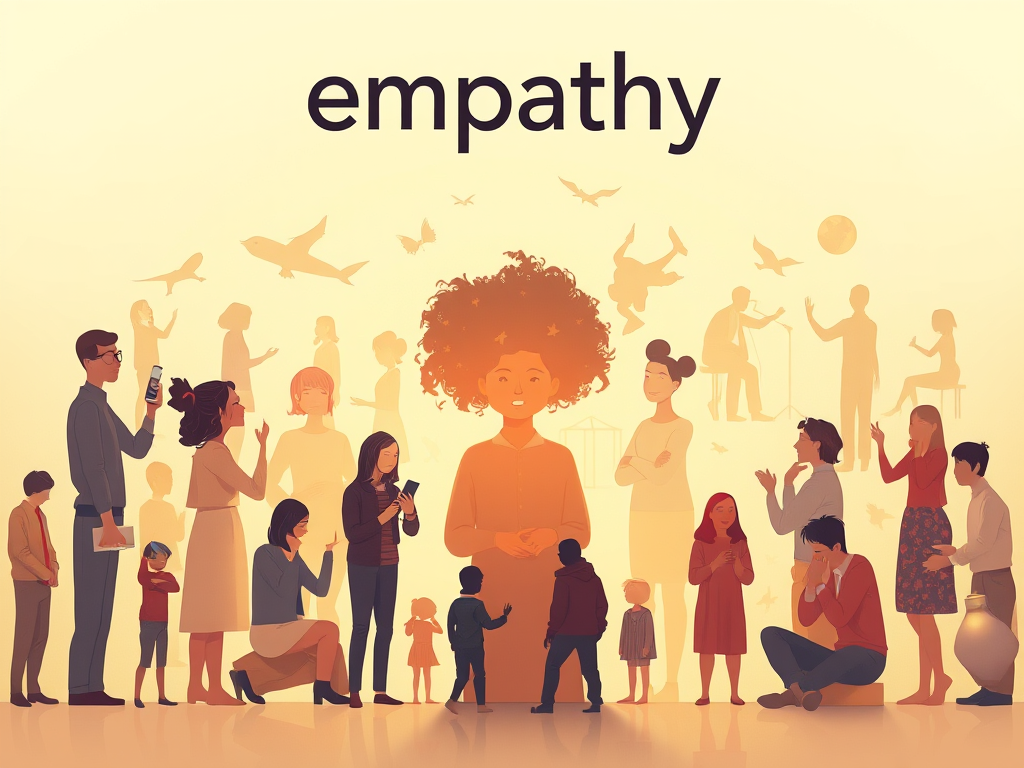
In our rapidly changing world, I’ve come to realize that one quality stands out as essential—empathy. It’s the thread that connects us all, reminding us that we’re more alike than different. When I take a moment to listen deeply or put myself in someone else’s shoes, I feel an incredible sense of connection that makes the day a little brighter.
But what makes this journey even more meaningful for me is passing on this value to my son. In a world that can be so quick to judge, I want him to grow up with the courage to care.
What Is Empathy?
To me, empathy is more than just feeling sorry for someone or sharing their happiness—it’s about truly stepping into their world. It means listening without judgment, feeling their pain, and celebrating their joy as if it were your own. I’ve learned that empathy isn’t passive; it’s an active choice—to pause, to understand, and to respond with kindness.
Why Empathy Matters Now More Than Ever
We live in an age of quick reactions and shallow conversations. But beneath the noise, people are craving connection. Here’s why I believe empathy is the need of the hour:
It builds bridges, not walls. It allows us to look beyond differences—whether of class, culture, or beliefs—and connect on a human level. It heals. I’ve seen how a kind word or listening ear can soften someone’s pain. I’ve felt it myself—how healing it is to be truly heard. It deepens communication. With empathy, conversations go beyond surface-level. You understand people better. You connect in a way that lasts.
How I’m Raising My Son to Be Empathetic
Teaching my son empathy isn’t about giving long lectures—it’s about showing him, day by day, what it looks like in real life. I talk to him about feelings, not just actions. If someone at school is being left out, I ask him how he thinks that person might feel. When he’s upset, I don’t just tell him to “stop crying”—I sit with him in that emotion and let him know it’s okay to feel.
When we see someone struggling, I ask him, “What can we do to help?” Whether it’s sharing a toy with a friend or saying thank you to someone who helped us, I try to show him that kindness doesn’t cost anything—but it can mean everything.
There are days when he surprises me—like the time he noticed a classmate sitting alone and invited her to play. After coming back from school, he narrated the whole story to me. He said, “Maa, no one was talking to her. She was all alone. I thought, if I were in her place, how would I feel? So, I invited her to play with me.” In those moments, I feel hopeful. I know he’s learning that it’s not about being the smartest, the fastest, or the richest. It’s about being kind. It’s about caring.
Because I believe, if more children grow up valuing empathy over ego, the world we leave behind will be a much softer, kinder place.
What I’ve Learned Through Practicing Empathy
Over time, I’ve realized that empathy transforms not just relationships—but your whole way of living. It makes you more patient, more open, and less reactive. It teaches you to respond instead of just reacting. And most of all, it gives you the power to make people feel safe, seen, and supported.
Empathy has helped me deal with judgment. It has helped me understand those who didn’t always understand me. And it’s helped me give grace to myself, too.
The Future Begins With Us
Imagine a world where empathy isn’t rare—it’s normal. Where our first instinct is to understand, not to judge. I believe it starts with small actions—at home, in conversations, in how we raise our children.
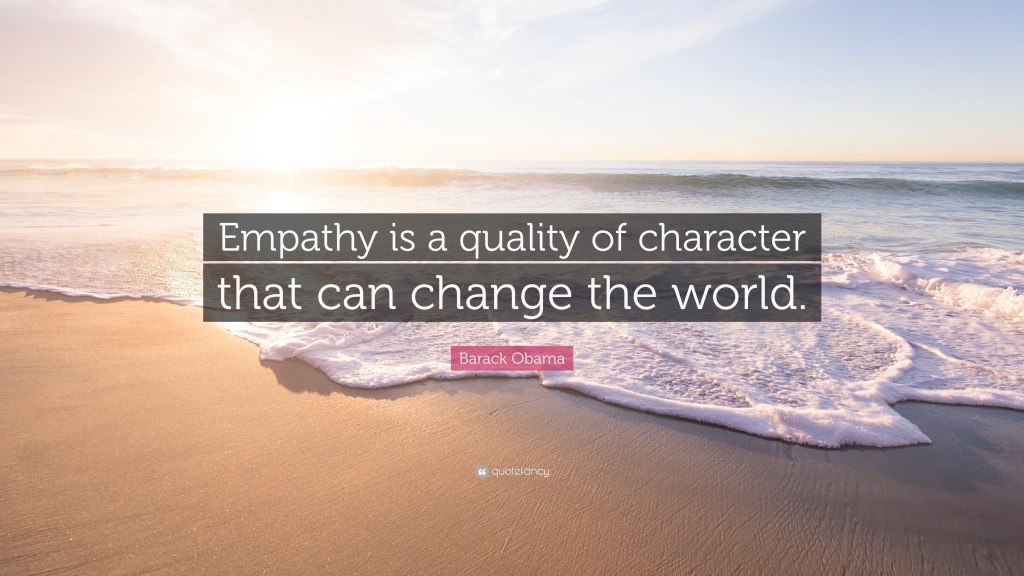
Empathy is not a weakness—it’s our quiet strength. It’s the soft power that changes hearts and connects souls.
And as I teach my son to grow with compassion in his heart, I hope that others will join in this ripple of kindness. Because truly, empathy is the need of the hour—not just for today, but for the world we’re building for tomorrow.
So the next time someone opens up to you, or you see a quiet sadness behind someone’s smile, pause. Listen a little longer. Feel a little deeper. Because the world doesn’t just need more opinions—it needs more open hearts.
What if the one thing someone needs from you today… isn’t advice or help—but simply to feel understood?
Yesterday, I experienced something truly special—a movie that not only entertained but also deeply resonated with the values of courage and sacrifice that have defined our history. I took my 7-year-old son to watch Sambhaji, a film that introduced him to a lesser-known yet valiant figure in our past.
A Child’s Innocent Curiosity
Growing up, my son was familiar with stories of great heroes like Shivaji Maharaj, Maharana Pratap, whose legends we read together. However, the character of Sambhaji was entirely new to him. His very first question was both sincere and thought-provoking: “Mom, who is Sambhaji? Why have we never heard stories about him?” I explained that history often leaves out many untold stories and that sometimes, the brave deeds of individuals are not as widely celebrated as they should be. I promised him that he would soon see what it means to be a true hero.
Witnessing History on the Big Screen
The film’s narrative was powerful, yet I felt that it only captured a part of the immense hardships and sacrifices that Sambhaji endured. When the movie ended, my son sat in silence—a silence that spoke volumes. He later confided, with a tender mix of sadness and wonder, about the torture and betrayal Sambhaji faced, especially the painful blows dealt by those he once trusted. I gently explained to him that what the movie portrayed was merely a glimpse, and that history holds even greater stories of valor and endurance that often remain unspoken.
Real Heroes vs. Fictional Avengers
In our conversation that followed, I reminded him that while superheroes like those in the Avengers capture our imagination (I am die hard fan for Marvels), real heroes live among us in the pages of our history books. True bravery is not only about fantastical feats—it is about the willingness to stand up, endure hardship, and sacrifice everything for one’s motherland. Sambhaji, with his undying spirit and resilience, is a testament to that courage.
The Importance of Learning Our History
Reflecting on our day at the cinema, I was struck by the importance of introducing our children to the heroes who have shaped our country. Being educated sometimes means assuming we know our history well, yet there remains so much to learn about the unsung heroes whose sacrifices have laid the foundation of our nation. I encourage every family to explore these stories together—watch a movie, read a book, or have a conversation about the acts of true bravery that have defined our past.
A Call to Discover True Bravery
If you have the opportunity, I would like to ask you to watch Sambhaji with your family. Allow your children to glimpse the lives of those who have fought tirelessly for our freedom. Let them understand the essence of true heroism—a legacy of courage, sacrifice, and an unyielding love for our land. By doing so, we help them appreciate the real stories of valor and perhaps inspire them to be brave in their own lives.
Let us all take a moment to honor these timeless heroes and to ensure that their stories, filled with real-life struggles and triumphs, are never forgotten.
There was a time when I felt like I was constantly failing—failing at being the ‘perfect’ mother, a wife, a daughter-in-law, the ‘ideal’ employee, and the person I wanted to be for myself. No matter how hard I tried, I felt stretched too thin. Between work deadlines, my child’s needs, and my own emotional struggles, I often asked myself, ‘When will I ever feel balanced?’
Becoming a mother brought more hurdles than I ever anticipated. My pregnancy was far from easy. I faced numerous health issues that made those nine months feel like a marathon. Emotional support was sorely lacking. Without my family’s support, the journey became even more arduous.
Career Pressures & Work Stress
I took a bold step back from my career for about five years to raise my child. It was tough, especially with no support from family, adding layers of stress. Restarting my career was overwhelming. Balancing job stress while being a mother felt like juggling flaming torches.
Losing Myself in Responsibilities
In the whirlwind of responsibilities, I lost sight of myself. Caring for my child and fulfilling work duties left no room for my own growth. I felt like I was just going through the motions.
How I Started Finding Balance
1. Prioritizing Mental Peace Over Toxic Environments
I took a leap of faith and quit a draining job. Finding a workplace that offered balance was a game-changer. Choosing mental well-being over a paycheck marked a pivotal turning point in my career.
2. Setting Boundaries & Letting Go of Toxic Relationships
I distanced myself from people who hurt me and stopped being a doormat. I learned to let go of relationships that added stress to my life.
3. Mindfulness & Meditation
My morning meditation practice, even if it’s just for 10 minutes, brought clarity and peace. Listening to Vedic mantras and bhajans became my sanctuary. Reading self-help books also helped me with mindfulness and provided different perspectives on my priorities.
4. Making Time for Myself Without Guilt
I stopped feeling guilty for taking time out for myself. Writing, self-reflection, or just sitting in silence—I now make myself a priority.
5. Being Fully Present with My Son
I focused on quality time over quantity—bedtime stories, hugs, and listening to his little tales became our cherished moments. Instead of striving to be a ‘perfect’ mom, I embraced being a mindful one.
6. Accepting That Balance is an Ongoing Process
Some days, work takes priority. Other days, I need to slow down and focus on my son or myself. And that’s perfectly okay. The biggest lesson I’ve learned: Balance isn’t about doing it all—it’s about doing what truly matters.
This journey has taught me that it’s okay to put myself first sometimes, and it’s okay to find my own way in the chaos. 😊
For the longest time, I thought balance meant having everything under control. But now, I know that true balance is about choosing what matters most in each moment. It’s about releasing guilt, setting boundaries, and embracing imperfection. If you’re struggling to find balance, remember—small steps lead to big changes.
Have you ever struggled with balancing motherhood, career, and self-growth? I’d love to hear your thoughts in the comments!
















 EvolutionInsights